 | |
Summer 2026 |
Newsletter Archive |
Using High-Tech Tools to Monitor Low-Tech Restoration |  |
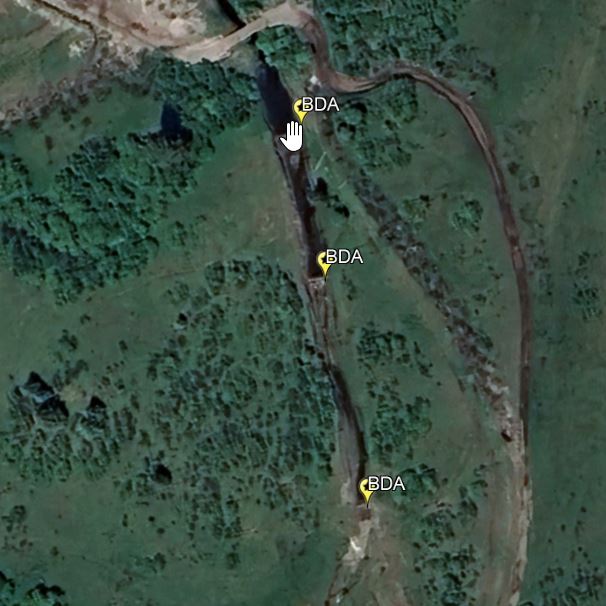
Satellite imagery is helping us track the long-term impacts of Beaver Dam Analogues. Part of the magic of beaver dam analogues (BDAs) is their simplicity. These low-tech structures are built from natural materials such as wooden posts, willow branches, mud, and rocks. I have heard them affectionately described as a “dirt lasagna” – thank you, Angela Ten from Freshwater Conservation Canada! BDAs are installed in degraded streams to mimic beaver dams; by slowing the flow of water they recharge groundwater, reconnect streams to their historic floodplains, improve riparian health and create vital habitat for many wildlife species. But, these changes don’t happen all at once. Ecosystem recovery takes time, making it important to monitor how sites respond in the years following installation. In the last few years, Miistakis has partnered with Cows and Fish, Freshwater Conservation Canada, Blood Tribe Land Management, and Piikani Nation Lands Department on several BDA restoration projects. With the first installations dating back to 2022, we recently took our first look at how these projects are progressing using remote sensing. By analyzing satellite imagery, we compared changes in vegetation greenness around streams before and after BDA installation, as well as at nearby sites with beaver activity and sites without beavers or BDAs. While we did not detect a statistically significant increase in vegetation yet, that isn't unexpected. Many of the BDAs are still relatively new, and subtle changes along small streams can be difficult to detect with satellite imagery. Restoring streams doesn't happen overnight, but today's technology allows us to watch that recovery unfold. As this long-term monitoring continues, remote sensing will help us measure the lasting benefits of these simple, nature-inspired restoration techniques. For more information, please read the report here. This work was supported by Environment and Climate Change Canada’s Environmental Damages Fund. | |