 | |
Spring 2026 |
Newsletter Archive |
On the Road to Smarter Mitigation |  |
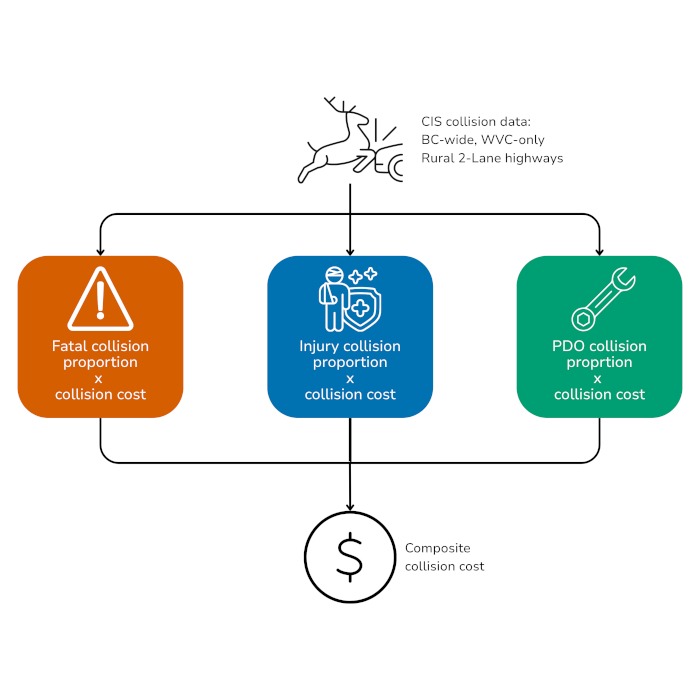
A new BC-specific composite collision cost is helping drive benefit–cost analyses for wildlife mitigation—supporting safer highways for people and better outcomes for wildlife. Wildlife-vehicle collisions (WVCs) are more than just an inconvenience; they are a persistent safety issue with real costs for both people and wildlife. Each year, an estimated 12,000 collisions occur on British Columbia’s road network – most involving deer, but also moose, elk, bears and others. These incidents contribute to human fatalities, injuries, vehicle damage, and broader societal costs. At the same time, roads can disrupt wildlife movement, fragment habitat, and increase mortality for species already facing pressures across the landscape. Effective mitigation measures, such as fencing, wildlife underpasses and overpasses, culverts, and detection systems, can reduce collisions and help wildlife move more safely across transportation corridors. A key challenge, however, is determining where, and how much, to invest. This project addresses that need by developing a BC-specific composite collision cost – at approximately $120,500 per collision – a key input for a benefit–cost analysis. A composite collision cost combines collision severity rates with associated economic costs to quantify the societal cost of WVCs and evaluate where mitigation measures will deliver the greatest return. We also developed a broader framework for benefit–cost analysis, with the opportunity to incorporate additional wildlife-specific and social values. It is designed to support transparent and defensible decisions where some value-based judgement is required. In short, it supports a strategic approach to road mitigation and helps target investments where they can improve safety for drivers while maintaining wildlife connectivity across British Columbia’s transportation network. Thanks to BC Ministry of Transportation for supporting this work, and input from Alberta’s Transportation and Economic Development and Biodiversity Pathways. | |